SISTER: All for one and one for all?
Group peer support alone does not improve treatment completion for Black women with high‑risk endometrial cancer, but a one-on-one human connection did.
Having the benefit of a virtual, peer-led social support group does not significantly improve the chances that Black women will complete their treatment for high-risk endometrial cancer. However, a new study designed to improve treatment outcomes among Black women in this cancer population shows that one-on-one peer support was an effective strategy for those women who actively engaged in the intervention.
In a first‑of‑its‑kind national clinical trial, the late-breaking abstract, “The social interventions for support in treatment of endometrial cancer and recurrence (SISTER) study: A national randomized controlled trial of peer support vs. usual care in Black women with high-risk endometrial cancer,” details what researchers discovered in investigating two virtual social support strategies compared to “enhanced usual care.” Instead of no intervention, women randomized to this arm received written materials that covered similar topics as those included in the virtual support sessions.
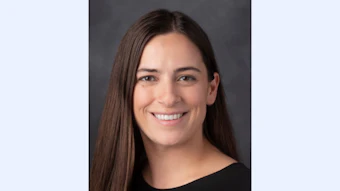
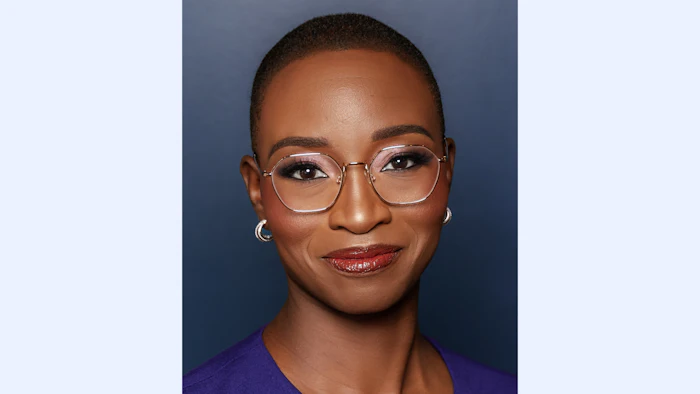
"Overall assignment to virtual peer-led support intervention did not statistically reduce the rate of incomplete treatment compared to enhanced usual care. About one in three women across all groups did not complete their planned treatment, which itself is an important and sobering benchmark,” said Kemi Doll, MD, MSCR, the lead investigator who presented the late-breaking abstract earlier today.
Dr. Doll is a professor of obstetrics and gynecology at the University of Washington School of Medicine in Seattle. “However, there is a genuinely exciting result in the per-protocol analysis: Among women in the one-on-one peer support arm who engaged with their peer supporter, 81% completed their full treatment — the highest completion rate of any group in the entire study. That compares to only 52% completion among women in that same arm who never attended a session. That gap is striking and statistically significant, and it tells us that there is a pathway to intervene and improve the treatment experience among Black women.”
Endometrial cancer is now the deadliest gynecologic cancer in the U.S., Dr. Doll said. Between September 2021 and September 2025, the SISTER study screened 610 Black women with high‑risk endometrial cancer across 13 sites nationwide, enrolling 252 participants and randomizing them into three groups:
- Weekly virtual group support sessions, led by Black endometrial cancer survivors
- One‑on‑one virtual peer support
- Enhanced usual care, consisting of mailed educational materials
Participants represented every U.S. region and had high levels of socioeconomic vulnerability: 58% were publicly insured, 36% held a high school diploma or less, and 56% reported difficulty meeting monthly expenses. Nearly half had stage III–IV cancer. These are patients often left out of biomedical treatment trials due to barriers in access and narrow trial eligibility criteria leaving them underrepresented in endometrial cancer research.
“Endometrial cancer has now surpassed ovarian cancer as the deadliest gynecologic malignancy, and Black women bear a disproportionate share of that burden — facing higher mortality rates than any other group, a gap that has only been widening,” Dr. Doll said. “We've known for two decades that disparate rates of treatment completion are one driver of this survival gap, but no one had ever run a rigorous trial to try to change that. SISTER is the first.”
The importance of trial goes beyond any single result, she said, emphasizing that SISTER has proven that researchers can successfully enroll hundreds of chronically underrepresented patients into a randomized clinical trial during one of the most stressful windows of their lives — the weeks surrounding a high-risk cancer diagnosis.
“Reaching this population, at this moment, in a rigorous scientific design — that itself is a major contribution to the field and evidence that underrepresentation of Black women in endometrial cancer trials is not inevitable,” she said. “For patients, the message is one of hope: Your experience matters to researchers, your community can be a source of healing, and there are scientists working hard to make sure that the newest and most promising cancer treatments work equally well for you.”
According to Dr. Doll, the SISTER trial fits into a growing body of work showing that social and structural factors shape cancer outcomes. The finding that engagement with peer support may drive treatment completion is consistent with research in other cancers and chronic diseases showing that sustained, relationship-based interventions tend to outperform passive information delivery.
“The fact that mailed materials and assigned-but-unattended sessions look similar in outcome suggests that the connection — the human relationship — may be the active ingredient, not simply the content,” she said.
The 34% nonattendance rate in the intervention arms is itself an important finding, Dr. Doll said, and a prompt for future work to identify barriers beyond economic strain that may prevent engagement. Participants were screened for financial need and provided devices and hotspot connectivity if needed.
“We aimed to minimize any and all barriers to entry,” she said.
"Why didn't one in three women engage? Was it logistical? Did the intervention not feel relevant? Were there illness-related barriers? Understanding engagement barriers will be essential to designing the next generation of interventions and implementing the effective one-on-one peer support in other settings,” she said. “We are also continuing to analyze our robust data on quality of life, social isolation, treatment data, side effects, and many other patient-centered outcomes from SISTER, which will give a fuller picture of what peer support does and doesn't do for this population.”
Finally, Dr. Doll said, “our research team was the first, but we will not be the last.”
“The peer support signal is real, the engagement question is answerable, and the women in this study deserve a follow-up effort that builds on what we've learned,” she said. “We hope this work motivates gynecologic oncologists, trialists, funders, and advocates to keep investing in social and structural interventions that have major impacts on the outcomes of Black women with endometrial cancer.”
View abstract presentation slides and session recordings on the event platform. Recordings will be available within 24 hours and accessible for 60 days.