The Move Toward Personalized Fertility Sparing Treatment
New study identifies molecular predictors of response to such therapies for endometrial cancer.

One of the most personalized approaches in the management of early-stage endometrial disease to date is emerging through the discovery of key biomarkers in a molecular analysis of young women who are undergoing fertility‑preserving treatment.
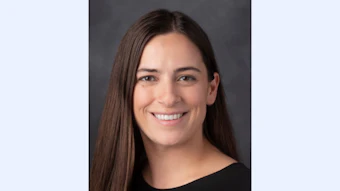
The research, “Prediction of response to fertility preserving progestin therapy for endometrial cancer based on molecular subtype,” was presented earlier today. The study’s author, Oleksandra Dzyubak, MD, said the research was designed to determine whether differences in tumor molecular subtype could predict how well patients respond to progestin therapy, the standard hormonal treatment used when women wish to preserve fertility. Although progestin is widely used in this setting, complete response rates at 12 months remain modest — typically around 60%, according to Dr. Dzyubak, who completed her training in gynecologic oncology at the University of Toronto in Canada.
“The landscape of endometrial cancer significantly changed with the introduction of molecular classification and the role it has on treatment and prognosis. However, there is not a lot of data on the role of the detailed molecular profile in young patients undergoing fertility preservation treatment with a progestin,” Dr. Dzyubak said. “Our study fills this gap by describing the relationship between molecular characteristics and outcomes of patients treated with fertility preservation intent.”
The study evaluated 77 patients treated through a specialized endometrial cancer oncofertility program between 2019 and 2024. All patients had low‑grade endometrioid tumors, no myometrial invasion, and were estrogen‑ and progesterone‑receptor positive. Molecular testing included immunohistochemistry and next‑generation sequencing across several genes commonly implicated in endometrial cancer, such as TP53, POLE, CTNNB1, PTEN, PIK3CA, and KRAS.
Notably, 91% of patients fell into the No Specific Molecular Profile (NSMP) category, Dr. Dzyubak said, while 6.5% had Mismatch Repair–deficient (MMRd) tumors — a subtype known for its role in Lynch syndrome and immunotherapy responsiveness. Although small, this group displayed striking differences in treatment outcomes, she said.
At 12 months, the complete response (CR) rate for the entire cohort was 58%, improving to 83% by 24 months. But molecular subtype significantly impacted success:
- MMRd tumors had a 0% complete response rate, compared with 60% CR in NSMP tumors (p = 0.03).
- This was despite all tumors — MMRd and NSMP alike — showing high estrogen and progesterone receptor expression, traditionally viewed as favorable for hormonal treatment.
“Molecular characteristic of the tumor can offer more detailed and personalized counseling for young patients with endometrial cancer interested in fertility preservation treatment. For example, an MMR-deficient tumor, even if low grade and estrogen/progesterone receptor positive, may have a lower chance of responding to treatment. Therefore, closer monitoring may be needed and a hysterectomy not delayed beyond 12 months of treatment if complete response is not achieved,” she said. “Alternatively, patients with a complete response to progestin treatment and presence of a PTEN mutation may not need a completion hysterectomy, as the risk of recurrence is significantly lowered.
According to Dr. Dzyubak, the findings suggest that receptor positivity alone is not sufficient to predict success with progestin therapy and underscored the signal MMR deficiency represents as a powerful negative predictor.
Additionally, other mutations showed no impact on initial response, she said. Mutations in CTNNB1, PTEN, PIK3CA, and KRAS — all frequently observed in endometrial cancer — did not affect the likelihood of achieving a complete response to progestin therapy.
However, one genetic marker did have meaningful implications for long‑term risk, according to Dr. Dzyubak:
- PTEN mutation was associated with a significantly reduced risk of cancer recurrence among patients who achieved a complete response (HR = 0.20; p = 0.008).
- This finding may influence decisions around whether patients require a completion hysterectomy after completing childbearing — a long‑standing question in the management of conservative therapy survivors.
Although fertility preservation remains a critical option for many young women with endometrial cancer, Dr. Dzyubak said the study underscores the limitations of a one‑size‑fits‑all approach. Molecular classification — now widely used to guide prognosis and treatment decisions in other endometrial cancer subsets — is proving equally relevant in the oncofertility setting.
The authors note that for patients with MMRd tumors, clinicians should consider:
- Closer monitoring during treatment
- Earlier intervention if no response is seen
- Avoiding prolonged progestin therapy beyond 12 months without clear improvement
Conversely, patients with PTEN‑mutated tumors and a documented complete response may not require routine hysterectomy, given the lower recurrence risk, she said. However, more research is needed to support this recommendation.
Mutations such as CTNNB1 (exon 3) have been associated with recurrence in early-stage endometrial cancer treated with surgery, Dr. Dzyubak said. However, there has been little data on how molecular features influence outcomes when fertility preservation is the goal. This study provides one of the first detailed descriptions of that relationship, paving the way for more individualized therapy.
“Even though all patients who underwent fertility preservation treatment for endometrial cancer had a low-grade histology, and were all estrogen and progesterone receptor positive, prognosis varied based on the molecular status,” Dr. Dzyubak said. “This information can be used to provide patients with personalized counseling regarding duration of treatment and the potential need for a completion hysterectomy after fertility goals are achieved.”
View abstract presentation slides and session recordings on the event platform. Recordings will be available within 24 hours and accessible for 60 days.